


An Open Letter to Lumios Owners
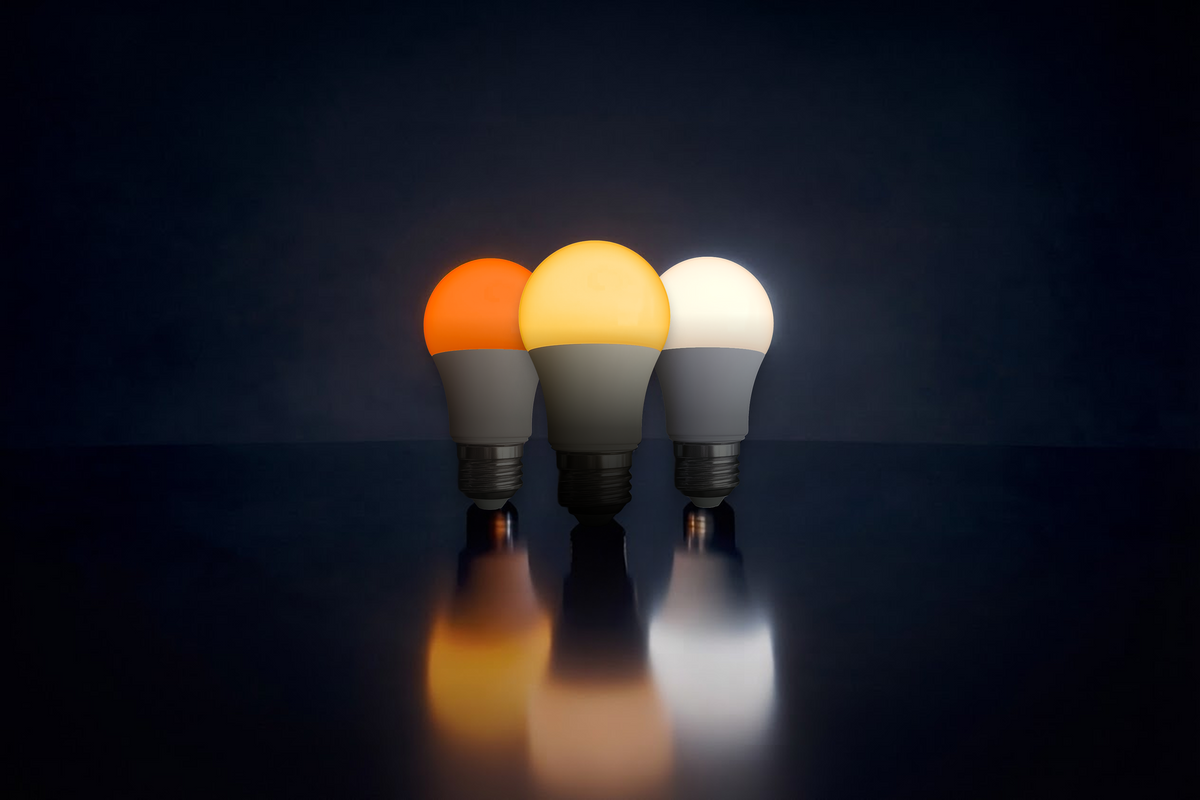
An Open Letter to Lumios Owners
Hi,
This is Matt Maruca, founder of Ra Optics.
If you are a Lumios owner, I would like to thank you for your purchase. Read on to understand why this might be one of the best decisions you’ve ever made.
The response to Lumios has been tremendously positive. We were surprised by how quickly we sold out of Glow, and then Sky. Customers are loving Lumios — warm, flicker-free, high-color-rendering, near-infrared-enhanced, low-blue LED light. It is truly light of the future.
First: I need your help. Which bulb shapes (& other lighting types) should we make next? To provide your input, share any feedback, or ask any other questions, please fill out this brief survey. It is designed to take 2 to 3 minutes. I'll read every response and take them into consideration for future product development. I may even email or call you for more feedback.
I'd like to share with you once more why Lumios is a revolution in lighting — unlike the vast majority of products that claim to be “healthy lighting”, but are often more harmful than conventional LEDs.
Lumios is the world’s first ever truly human-friendly LED lighting. "Human-friendly" is a phrase we use on purpose. Here is what it means:
1. Hormonally neutral
Blue light is the component of sunlight which signals the brain and body that it's daytime, increasing the production of stress hormones, activating the nervous system, and pushing us into performance mode. Some blue light is beneficial, especially in the morning, but the high blue content of conventional white LEDs triggers chronic overstimulation, leading to stress, anxiety, and stress-associated health conditions. Unfortunately, the majority of so-called “healthy” or “human-centric” lighting actually increases this stimulating blue light further, exacerbating these effects.
At night, this same blue light continues to stimulate the brain and body, "tricking the system" into thinking it's still daytime and preventing the natural relaxation, wind-down, sleep, and cellular recovery processes essential for health and well-being.
In addition, excessive blue light can cause physical damage to the eyes and skin via increased production of free radical molecules, called reactive oxygen species (ROS).
For the vast majority of human evolution, we inhabited environments dominated by green vegetation and shade, such as forests and jungles, which reduce stimulating and harmful UV and blue light. At night, there was virtually no light besides fire, which lacks blue light, while being rich in beneficial deep red and near-infrared wavelengths.
Lumios produces light which is neutral for your hormones and nervous system, as under the forest canopy, by limiting the relative quantity of blue light — while offering modes for nighttime that remove blue light entirely.
As a result, Lumios helps to:
a) reduce eye strain, supporting long-term eye and skin health
b) reduce stress and anxiety during the day, while supporting a naturally elevated mood, sharper focus, and higher productivity
c) support the body’s natural wind-down, sleep, and recovery processes at night.
A human-friendly LED allows your brain, body, and nervous system to stay in balance, day and night.
2. Deep-red and near-infrared enriched
More than 40% of the radiant power of sunlight reaching the earth’s surface is near-infrared. It penetrates deep into our cells and is absorbed by cellular water and mitochondria (cellular energy producers), directly enhancing cellular metabolism and energy (ATP) production. Thousands of studies have confirmed the tremendous benefits of deep red and near-infrared light for cellular health, which is why red light therapy (mostly near-infrared) has become one of the most popular and effective wellness trends.
That same jungle/forest environment supplied a massive quantity of near-infrared to our cells during daytime, because these exact wavelengths are reflected by the chlorophyll pigment in plants.
Fire radiates predominantly red and infrared, much of it near-infrared.
Even old-school indoor lighting — incandescent and halogen bulbs — emitted significant quantities of deep red and near-infrared radiation.
But because this portion of the spectrum consumes energy without contributing as much to visible illumination as green and blue light, these traditional light sources were effectively banned, in favor of those that produce bright visible light with minimal deep red, and virtually zero near-infrared.
Lumios uses advanced LED chips and phosphor technology to produce one of the first-ever white LED light sources enriched with a significant quantity of deep red and near-infrared radiation, restoring these essential wavelengths for eye health, skin health, and proper cellular function.
Any light source which lacks deep-red and near-infrared cannot be considered truly human-friendly. Unfortunately, the majority of lighting products marketed for health and wellness expand their spectrum into the more harmful short-wavelength range, incorrectly marketing a "beneficial full spectrum" — while completely missing the most essential wavelengths: deep red and near-infrared.
A human-friendly LED provides the wavelengths most essential for our cells’ well-being.
3. Effectively flicker-free
The power grid that runs all of our electrical appliances uses alternating current (AC), meaning the electricity reverses direction 100 or 120 times per second, depending on where you live. Any light source plugged into it turns on and off at that same rate.
Incandescent bulbs softened this flicker, because the hot filament keeps glowing between pulses (thermal inertia), though it never disappeared entirely. LEDs offer no such relief: they pass the AC flicker straight through into the light emissions. This happens too fast for us to perceive consciously, but evidence shows it still registers in the brain and nervous system, and can contribute to a lack of focus, stress, and even migraine headaches.
Lumios uses high-quality drivers that remove AC flicker completely, giving you a constant, steady light source, like the sun.
A human-friendly LED provides steady light, without disruptive AC flicker.
4. True color rendering
Color rendering refers to how well a light source renders the true color of something as seen under a light source which illuminates all visible colors, such as sunlight, firelight, and incandescent lighting. It is measured as Color Rendering Index (CRI).
Conventional LEDs emit a deficient spectrum which lacks this full range of color. This causes people, skin, faces, and other colored objects like food and paintings to appear pale, dull, and lifeless. It also reduces self-esteem, in a world where most people need more confidence, not less. It causes the ones we love to appear less healthy and vital. It is one of the greatest travesties of modern “energy-efficient” lighting.
While sunlight and incandescent light measure CRI 100, many LEDs are accepted as “good enough” with CRI 80.
We fully reject this depressing standard. Lumios LEDs are designed to offer the highest CRI possible while also limiting harmful blue light, achieving CRI ≥95 in the classic white modes on our bulbs: Day (2700K) and Evening (1800K).
A human-friendly LED lets you see people and objects in their true, natural colors.
5. Multiple warmth & brightness modes
In nature, light is never stagnant. Neither should our light be.
Yet, the majority of conventional LEDs are stagnant, unchanging, and far too bright at all times of day — especially after dark. And if they are dimmable, the flicker (#3) usually becomes far worse with dimming.
Lumios offers multiple pre-set dimming modes that allow you to match your light with the time of day, while remaining flicker-free.
Sky mode (on Lumios Sky) offers circadian-stimulating blue light to enhance energy and focus, which we recommend for a brief, intermittent boost during the day.
Otherwise, we recommend Day or Afternoon modes (on Lumios Glow and Sky) for balancing, hormonally-neutral lighting throughout daytime.
And as the day draws to a close, Evening and Candle modes (on Lumios Glow, Sky, and Candle) allow you to reduce brightness and reduce or completely eliminate blue light, while increasing the relative portion of beneficial deep-red and near-infrared wavelengths, to support your body’s natural wind-down, sleep, and recovery processes.
A human-friendly LED offers the flexibility you need to stay in balance during the day, and to wind down naturally in the evening.
———
This is our definition of human-friendly lighting.
- Hormonally neutral
- Deep-red and near-infrared enriched
- Flicker-free
- True color rendering
- Multiple warmth & brightness modes
This is just the beginning for Lumios. And now, we want you to help us direct the future of human-friendly lighting. It is only a matter of time until Lumios LED technology is available in every bulb shape & lighting type for your home — but we need your input for what comes next.
One final important note: during operation at full brightness, the body of the Lumios bulb can become fairly hot. This is a perfectly normal part of the bulb's thermal management process, as heat is dissipated via the ceramic body. Do not touch Lumios while it is operating, and allow sufficient time for it to cool after use, before handling. (For comparison: the body of Lumios still runs cooler than the glass of an operating incandescent bulb, which should also never be touched during operation.) A few customers commented on this heat production, so we wanted to clarify, as safety is always a priority.
Once again, thank you for your support of this incredible new technology. I genuinely look forward to reading your feedback, to connecting, and to sharing the future of Lumios with you.
Matthew Maruca
Founder & CEO
Ra Optics


